9 December 2020 / online
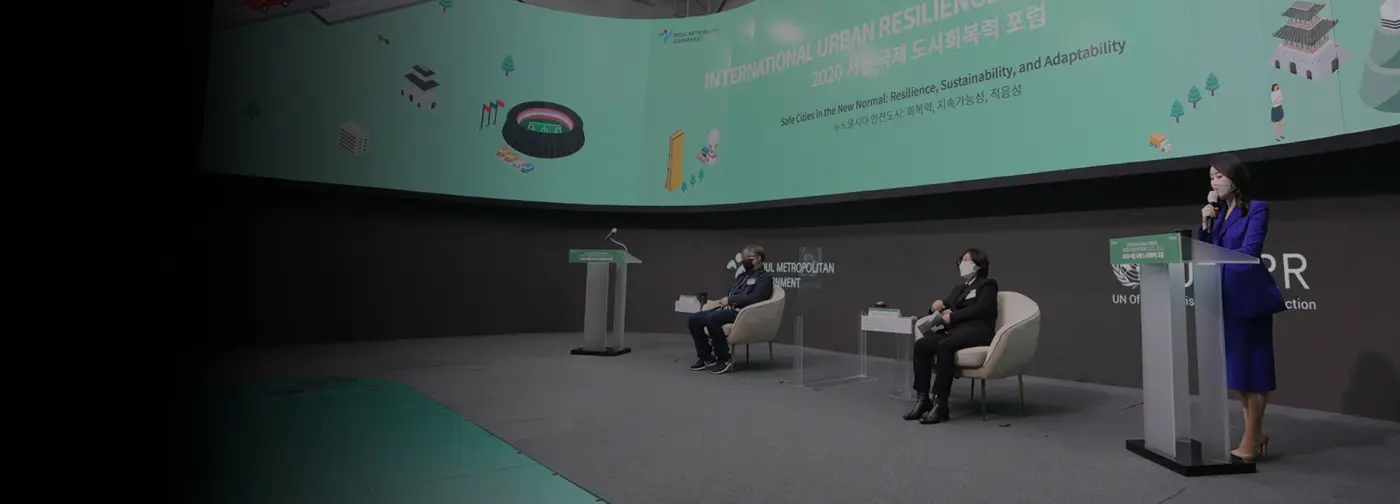
International Urban Resilience Forum Seoul 2020
The 2020 forum worked under the theme "Safe Cities in the New Normal: Resilience, Sustainability, and Adaptability." It asked how cities should handle risk after COVID-19, using examples from cities around the world.
- Date
- Wednesday, 9 December 2020
- Format
- Broadcast online on YouTube
- Structure
- Opening ceremony and three sessions in one day
- Language
- English, with simultaneous English-Korean interpretation
Background
Urban safety underpins citizens' lives and a city's competitiveness. After a run of disasters, COVID-19 among them, strengthening resilience became a central policy task. Climate change, shifts in the international environment and economic and social change have blurred the old line between natural and man-made disasters, which is why many argued that disaster management itself needed a new paradigm.
In a society that is more connected with every technological step, one country's trouble no longer stays inside its borders. To keep developing through economic crises and disasters, cities need to absorb shocks nobody expected. That calls for a risk strategy that limits damage, reduces vulnerability and prepares people for change, not one that only repairs things afterwards.
For about a year after the pandemic began, treating patients and stopping the spread came first. Planning for the post-COVID period shifts attention to rebuilding broken social systems and building long-term resilience. The psychological toll on citizens, and the need to widen social safety nets through psychological preparedness, was singled out as a priority.
The Fourth Industrial Revolution had also pushed smart, safe cities up the agenda, and many countries in Europe, Asia and the Americas had started building them. Safety information pushed down from government is rarely felt by citizens, and scattered situation management weakens integrated safety work. A city where people feel the benefit directly and prevention comes first needs businesses, academics, communities and cities worldwide to cooperate.
The forum grew out of that thinking. Through case presentations and discussion it aimed to exchange information on urban resilience in the COVID-19 era and look for solutions, giving city leaders, experts, organizations and civil society a place to share experience.
Objectives
- Share best practices for strengthening urban resilience in cities worldwide.
- Strengthen cooperation and information exchange with cities abroad on shared disaster problems.
- Discuss trends in smart safety technology and how it applies to sustainable, disaster-resistant cities.
- Understand the role of governance, including citizen participation and global partnerships.
- Look for ways forward in disaster risk management through discussion among experts and cities' chief resilience officers.
Who it was for
- Mayors and governors
- Executives in disaster management
- Professors and academics
- Experts and non-governmental organizations
Language
Presentations and discussion were in English, with English-Korean simultaneous interpretation.